
Rui
listen about me
Calatropis procera (Aiton) W.T. Aiton
Classification:
Kingdom: Plantae
Division: Angiospermae
Class: Gamopetalae
Subclass: Gamopetalae
Series: Bicarpelatae
Order: Gentianales
Family: Apocynaceae
Genus: Calatropis
Species: procera
Scientific Name: Calatropis procera (Aiton) W.T. Aiton
Common Name-
English: Apple of Sodom, Sodom apple, roostertree, kings crown, small crownflower, giant milkweed, rubber bush, and rubber tree.
Description:
Stem: Erect, branched, cylindrical, solid, contains milky latex.
Leaves: 100–200 mm (4–8 in) long, decussate, obovate or elliptic-oblong, shortly acute, subsessile, cordate or often amplexicaul at the base.
Inflorescence: Umbellate cymes.
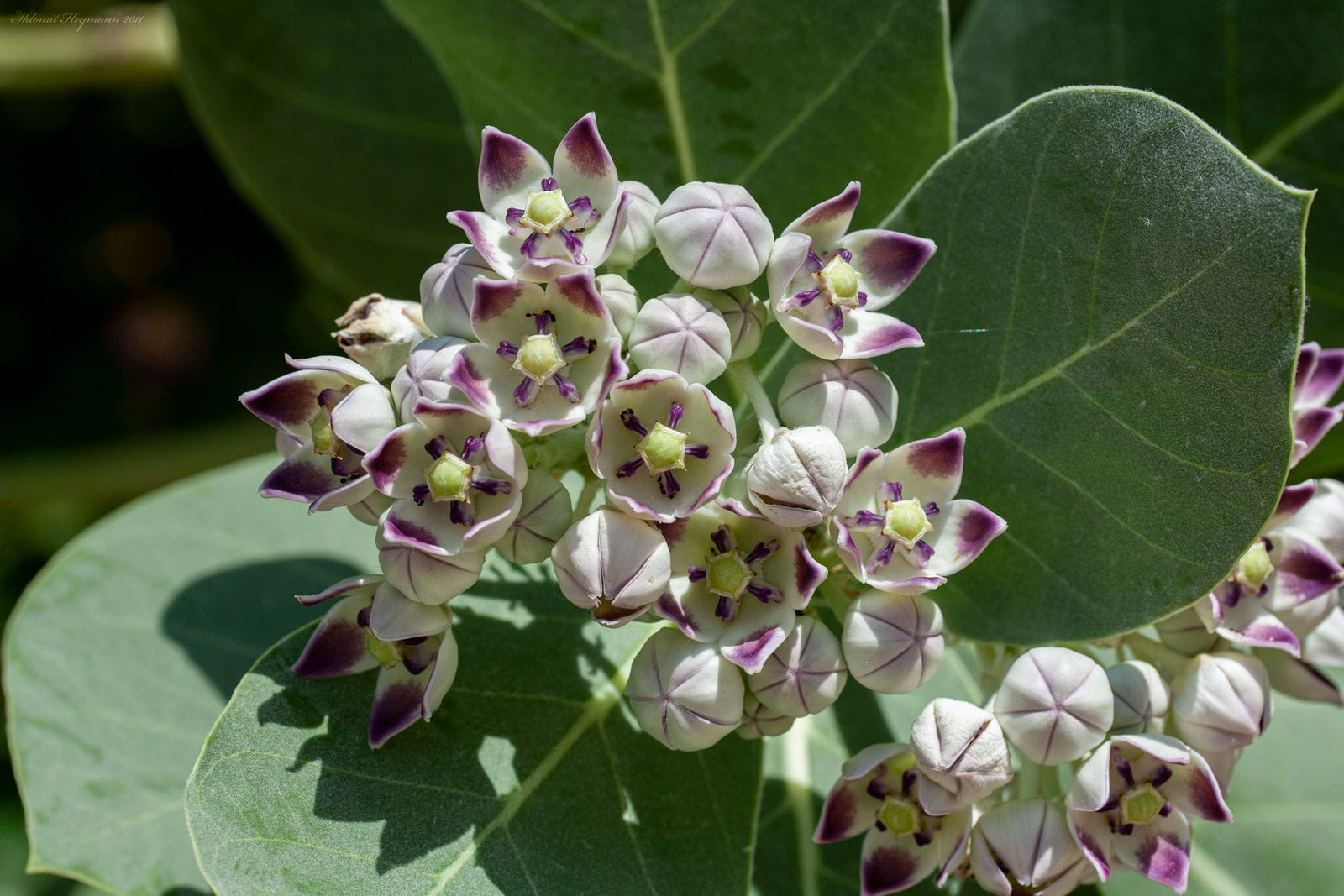
Flowers: Medium sized, pinkish, little scented, peduncles arising between the petioles. Flower-buds ovoid, angled, Calyx lobes 5, divided to the base, pink, ovate; corolla broadly
rotate, valvate, lobes 5, deltoid ovate, reflexed, coronate-appendages broad, obtusely 2- auricled below the rounded apex which is lower than the staminal-column. Stamens 5,
anthers short with membranous appendages, inflexed over the depressed apex of the
pentagonal stigma. Pollinium one in each cell, pendulous caudicles slender. Carpels 2 distinct, styles 2, united to the single pentangular stigma, ovary 2-celled, ovules many.
Fruit: A pair of follicles with many, hairy seeds.
Uses: Calotropis procers has been used as a folk medicine in India for many years, and has been reported to have a variety of uses. In Ayurveda, Indian practitioners have used the
root and leaf of C. procera in
asthma and also used in bacterial infection, swelling with redness, boils also and shortness of breath and the bark in liver and spleen diseases.