
BAHAVA, AMALTAS
listen about me
Cassia fistula Lam.
Classification:
Kingdom: Plantae
Division: Angiospermae
Class: Equisetopsida
Order: Fabales
Family: Fabaceae
Genus: Cassia
Species: fistula
Scientific Name: Cassia fistula L.
Common Name-
English: Golden Shower, Purging Cassia, Indian Labernum
Hindi: Amaltash
Marathi: Bahava, Amaltas
Sanskrit: यमलपत्रक Yamalapatrakah, युग्मपत्र Yugmapatra
Distribution: Common in deciduous forests, in ghats & hilly areas
Description:
Habit & Habitat– Medium sized, deciduous trees grow up to 20-30 m high. It grow fast in favorable conditions. Trunk is straight, bark smooth and pale-gray when young, rough and dark brown when old, branches spreading, slender. The tree has strong and very durable
wood, and has been used in construction. The golden shower tree is not a nitrogen fixer.
Leaves– Pinnately compound, 6-24 in. long, with 3-8 pairs of leaflets. Each leaflet is 3-8 in. long and 1 ½ to 3 in. broad. Main rachis pubescent (minutely hairy), stipule minute,
pubescent.
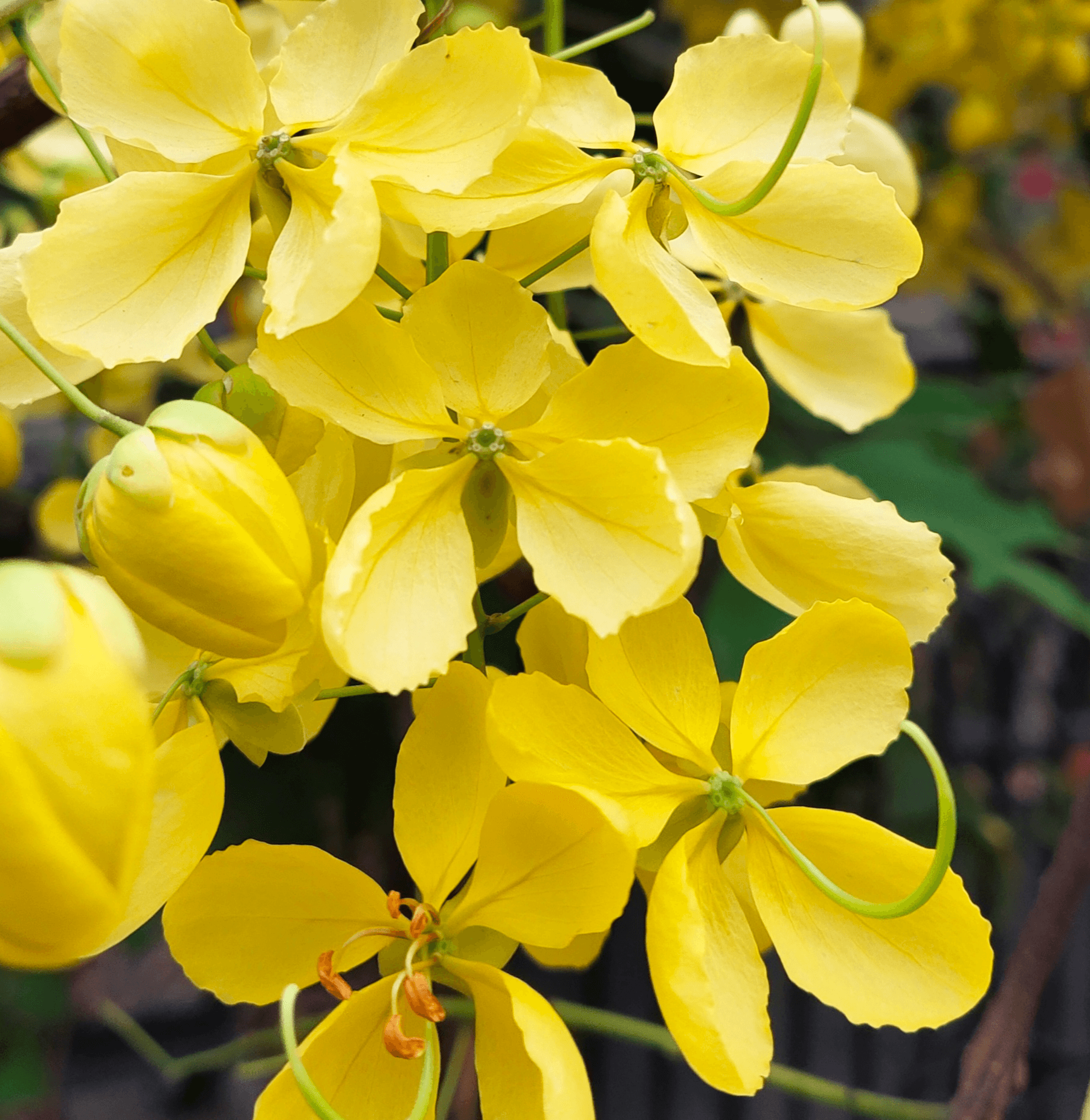
Flowers– are bright yellow, drooping, very showy. Bisexual, 10-12 mm across, yellowish- white, in terminal and leaf opposed few flowered racemes; bracts and bracteoles 2-3
toothed, minute, pubescent; pedicel 1-2 mm, slender.
Calyx– divided at base, pubescent, oblong, obtuse. Corolla- with 5 yellow petals, subequal, obovate, shortly clowed, veined.
Stamens– all antheriferous, 3 lowest are longest with very long curved filaments and dehiscing longitudinally. The 4 lateral with straight filaments and versatile, anthers opening by pores at the base. The remaining 3 are much smaller with indehiscent anthers.
Gynoecium– pendulous, long, cylindric, straight, smooth, shining.
Fruit- a pods shining, long, smooth, brown-black, indehiscent with numerous seeds, with dark colored sweetish pulp. Seeds are separated by transverse dissepiments. Seeds broadly ovate.
Medicinal Uses: In Ayurvedic medicine, the golden shower tree is known as aragvadha, meaning ‘disease killer’. The fruit pulp is considered a purgative and self-medication or any use without medical supervision is strongly advised against in Ayurvedic texts. It is more effective as an ingredient in some mass-produced herbal laxatives. In India, a cathartic
made from the pulp is sometimes added to tobacco. A paste of the flowers is used as an ointment for pimples
Cultural Importance: Cassia fistula is both the national tree and national flower of Thailand. Its yellow flowers symbolize Thai royalty. A 2006–2007 flower festival, the Royal Flora Ratchaphruek, was named after the tree. Cassia fistula is also featured on a 2003 joint Canadian-Thai design for a 48-cent stamp, part of a series featuring national emblems. The Indian laburnum is the state flower of Kerala. The flowers are of ritual importance in preparation of Kani during the ‘ Vishu ’ festival of Kerala which falls in the month of April. The tree has been depicted on a 20-rupee stamp. The tree is frequently cultivated in Buddhist temples in Sri Lanka where the Sinhala name is Ehela. In Laos, its blooming
flowers known locally as dok khoun are associated with the Lao New Year. People use the
flowers as offerings at the temple and also hang them in their homes for the New Year in belief that the flowers will bring happiness and good luck to the households. The laburnum
is the school tree of National Taiwan Normal University, thought to be because of the seed pods similarity to the whips used by teachers in times past.